Plenty of people talk about successful entrepreneurs in Malaysia as if success comes down to confidence, timing, or one good idea. In reality, the entrepreneurs who build lasting businesses usually get one thing right early. They find a strategy that fits the market in front of them, then keep sharpening it until the business becomes difficult to ignore. That is often what turns momentum into real business growth.
This is what makes founder strategy worth studying more closely. A strong business does not grow only because the founder is ambitious. It grows because the founder understands what the market needs, what the model can sustain, and how to keep improving the business once the first wave of attention passes. That is a useful lesson for readers following entrepreneur Malaysia, especially those trying to understand how real businesses are built under actual market pressure rather than ideal conditions.
1. Bryan Loo of Tealive

Bryan Loo did not build Tealive by trying to create the most premium-looking beverage brand in the market. He built it by making the product highly repeatable, accessible, and relevant to Malaysian drinking habits. In BFM’s founder fireside on building a Malaysian franchise, Bryan spoke about what it takes to build a local F&B giant, while a later BFM corporate profile on Tealive showed how Loob Holdings had expanded into a multibrand business. The strategy was not only to sell drinks. It was to build a format that could keep working across different locations, customers, and price sensitivities.
Why his strategy worked
This strategy worked because Tealive was designed for repetition from the start. The brand understood mass consumer behaviour well enough to keep innovating without losing familiarity. It stayed broad enough for scale while remaining local enough to feel easy to adopt. That is often the difference between a trendy product and a real franchise business. Tealive did not need to feel rare to win. It needed to feel reliable and widely relevant.
What founders should learn from Bryan Loo
A lot of founders chase uniqueness too early. Bryan Loo’s business strategy shows that repeatability can be a stronger advantage than novelty. A business does not always need to feel exclusive to become valuable. It needs a model that still works when the founder is no longer standing inside every outlet.
2. Eric Cheng of Carsome

Eric Cheng built Carsome around a much bigger gap: the lack of trust in used-car transactions. In Forbes’ report on Carsome’s path to profitability, Eric explained how the business was moving toward break-even and then profit, while Carsome’s own 2025 profitability announcement pointed to stronger unit economics, better margins, and cost discipline. Those financial improvements matter because they reflect a business that went beyond lead generation and built a more integrated operating model.
Why his strategy worked
Carsome worked because it treated confidence, inspection, refurbishment, financing, and after-sales structure as part of the customer promise. In fragmented markets, people often say the problem is “lack of efficiency,” but the real issue is usually lack of confidence. Carsome’s strategy was to reduce that uncertainty. That turned a difficult market into a much bigger business opportunity.
What founders should learn from Eric Cheng
Eric Cheng’s strategy is a good reminder that technology alone does not fix broken markets and that if trust is the real problem, then trust has to be built into the operating system, not added later as branding. That is what separates a marketplace that attracts traffic from one that becomes structurally stronger over time.
3. Khairul Aming

Khairul Aming’s business success is often reduced to content popularity, but that misses the real strategy. He built trust and familiarity through years of free, consistent content before turning that audience into buyers. Vulcan Post reported that his business recorded RM42 million in sales in 2024, and also covered how he took time before launching a second product, Dendeng Nyet Berapi, instead of rushing to flood the market with new SKUs.
Why his strategy worked
Khairul did not confuse attention with readiness. He let the audience relationship become strong first, then launched products into a market that already trusted him. That meant the business was not forced to buy credibility later. It already had it. When demand came in, it came in hard because the audience-product fit had been built over time.
What founders should learn from Khairul Aming
A lot of founders try to sell too early. Khairul Aming’s strategy shows the value of building trust before pushing product. If people already believe your taste, your standards, or your judgement, your product starts with an advantage many brands spend years trying to create.
4. Chan Kee Siak of Exabytes

Chan Kee Siak built Exabytes by staying close to the long-term needs of SMEs rather than chasing short-lived digital trends. In BFM’s profile on how he built a nine-figure digital business, Chan spoke about starting young and growing Exabytes into a major infrastructure player for businesses going online. Exabytes’ own story material, including From Zerobyte to Exabytes, reinforces the same theme: the company grew by staying useful to the same type of customer across more and more digital needs.
Why his strategy worked
This strategy worked because Exabytes did not stop at one service. Hosting brought SMEs in. Then the business expanded its relevance across other digital tools, cloud services, training, and ecosystem support. In other words, Chan did not build around one product. He built around one customer segment and kept widening the reasons that segment would stay.
What founders should learn from Chan Kee Siak
If you can identify one customer group clearly enough, the better move may be to deepen your usefulness to them over time rather than constantly chase a new audience. Exabytes is a strong example of business strategy through relevance compounding.
5. Kamarul A Muhamed of Aerodyne

Kamarul A Muhamed’s strategy at Aerodyne is different from most founder playbooks because he leaned hard into reinvestment and technical depth even when it pressured short-term earnings. In The Edge’s 2024 feature on private market investing, Kamarul said Aerodyne’s losses were tied to R&D as the business shifted from drone services into a deeper technology company. FedEx’s profile on Aerodyne also highlighted his emphasis on innovation, strategic partnerships, and adaptability as the company expanded across countries and sectors.
Why his strategy worked
This worked because Aerodyne was not trying to stay in a crowded services lane forever. The business was moving up the value chain. Instead of protecting short-term comfort, Kamarul chose to build capabilities that could win much larger contracts later. That is why Aerodyne became more than a local drone company. It became a globally active enterprise with stronger technical and commercial relevance.
What founders should learn from Kamarul A Muhamed of Aerodyne
Some markets reward patient reinvestment more than early profit-taking. Kamarul’s strategy is a useful reminder that if a company wants to move into a higher league, it may have to spend ahead of current validation. That is uncomfortable, but in deeper tech sectors it is often how category leaders are actually built.
6. Patrick Grove of Catcha Digital
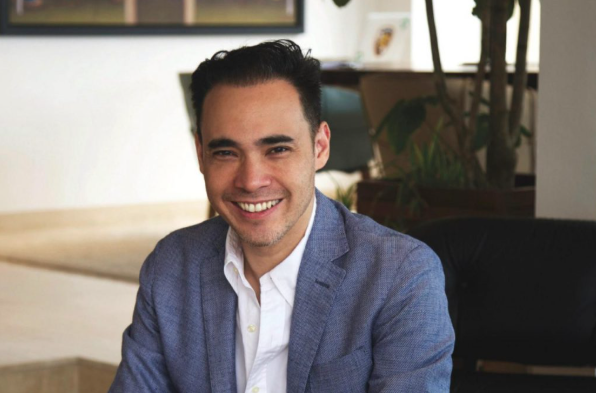
Patrick Grove’s business strategy has long been different from the founder model centred on one business alone. In The Edge’s report on Catcha Digital’s buying streak, the group was described as having completed seven acquisitions in twelve months while applying central M&A discipline and capital allocation structure. The same reporting explained that Catcha positioned itself as a long-term home for profitable businesses rather than as a short-term financial flipper.
Why his strategy worked
This strategy worked because Catcha did not buy randomly. It bought businesses that could fit into a broader digital and media logic while still being run by capable operators. That allowed the group to diversify earnings, create new layers of growth, and keep compounding through a portfolio rather than a single business line. It is a very different entrepreneurial skill from product building, but it is still a serious entrepreneurial strategy.
What founders should learn from Patrick Grove
The lesson here is not that every entrepreneur should become an acquirer. It is that building value can happen at portfolio level too. Patrick Grove’s success shows that entrepreneurship is not only about starting from zero. It can also be about spotting where other businesses can become more valuable inside a better capital and operating structure.
7. Davis Chong of Solarvest

Davis Chong built Solarvest in a sector that many founders would have treated as straightforward project contracting. What stands out is that he has been moving the company beyond one-off installation work into a broader clean-energy model. In The Edge’s 2024 interview on Solarvest’s overseas expansion, Davis said the company wanted at least 30% of revenue from overseas and non-solar renewable energy segments. Market coverage and company materials also show Solarvest pushing into battery energy storage, financing structures, and larger clean-energy solutions.
Why his strategy worked
The business kept widening its role in the energy value chain. That is strategically important. A company tied only to project delivery can grow, but it remains more exposed. A company that moves toward financing, storage, and broader end-to-end clean-energy solutions builds more staying power and more strategic relevance.
What founders should learn from Davis Chong
Davis Chong’s strategy is a strong example of not settling for the first version of a business model. Once a company proves it can deliver in one layer of a market, the next question should be whether it can move into higher-value, more defensible layers. That is how Solarvest looks more like an energy platform than a single-service company.
8. Yeo Siak Meng of Farm Fresh

Farm Fresh is one of the clearest Malaysian examples of vertical integration used as a business strategy. The company’s own sustainability and annual reports describe its “grass-to-glass” model, with control stretching from farming to processing and distribution. That is not a branding phrase alone. It is a structural choice. Yeo Siak Meng and the business built around him have used that control to make quality, supply, and brand trust much more defensible.
Why his strategy worked
The product must be consistent, available, and trusted. Vertical integration gave Farm Fresh more control over those fundamentals. Later reports, including analyst commentary on Farm Fresh’s 2025 trajectory, also note that this integrated model gave the company room to diversify into adjacent categories such as frozen dairy while keeping the same operational logic.
What founders should learn from Yeo Siak Meng
Founders often talk about owning the customer, but in some categories owning more of the supply chain may be just as important. Farm Fresh shows that when a business controls enough of the system behind the product, it becomes much harder for competitors to copy the full experience.
9. Lee Thiam Wah of 99 Speed Mart

Lee Thiam Wah’s 99 Speed Mart story is not built on glamour, but it is one of the strongest retail strategies in Malaysia. The company’s prospectus and annual report trace its roots back to a single sundry store in 1987 and show how it expanded into a national chain with thousands of outlets and distribution centres. More recent reporting from Reuters and The Edge shows the same discipline continuing, with the group sticking to an annual target of opening roughly 250 new outlets.
Why his strategy worked
This strategy worked because 99 Speed Mart focused on density, essential goods, and tight execution rather than trying to reinvent retail. The model is low-margin and high-volume, which only works when site selection, logistics, inventory, and cost control are strong enough to support repetition.
What founders should learn from Lee Thiam Wah
A lot of entrepreneurs want businesses that look exciting from the outside. Lee Thiam Wah’s strategy is a reminder that often the strongest businesses are the ones tied to habit, necessity, and operational consistency. When the system works, scale becomes a function of repetition, not reinvention.
10. John-Son Oei of EPIC Collective

John-Son Oei built EPIC Collective around community empowerment, but the reason the model deserves attention is that it was structured to move beyond simple charity. In So This Is My Why’s conversation with John-Son, EPIC was framed as a social enterprise helping underprivileged communities through home building and social impact. ASEAN and EPIC’s own 2024 impact report show the same thing more clearly: the organisation has created a repeatable model for mobilising volunteers, building homes quickly, and connecting support to dignity rather than dependency.
Why his strategy worked
His strategy and model could attract volunteers, partners, and communities because it had structure around the mission. That made the impact more durable and more scalable than a founder-led goodwill story with no operating engine behind it.
What founders should learn from John-Son Oei
EPIC is a good reminder that purpose and strategy do not need to sit on opposite sides. A mission-driven company becomes much stronger when the operating model is just as carefully built as the purpose statement. John-Son Oei’s work matters because he turned that principle into a functioning organisation.
Why These Strategy Lessons Matter for Entrepreneurs in Malaysia
One reason articles like this matter is that they make entrepreneurship easier to study properly. A lot of people admire successful founders, but far fewer stop to examine why their model worked in the first place. That is the useful part. Once the strategy becomes clear, the business becomes easier to understand and the founder’s success becomes much harder to dismiss as luck alone.
This is especially relevant in entrepreneur malaysia, where founders often operate in practical, competitive, and resource-conscious conditions. The strategies in this article are not abstract theories. They connect to repeatability, trust, supply control, platform depth, reinvestment, and sharper operating models. Those are the kinds of lessons that matter not only to large corporations, but also to small business Malaysia owners trying to understand what creates real staying power in the market.
This is also where a strong entrepreneur magazine becomes useful. A good platform does more than profile founders. It helps readers connect business stories to larger patterns in the market. Entrepreneur Insight already plays that role through its homepage, strategy coverage, finance articles, and founder-focused content. Its site covers entrepreneurship, leadership, finance, and current business issues, which makes it relevant for readers trying to keep up with business trends Malaysia and apply those lessons in a more practical way.
What these 10 business strategies really show
These entrepreneurs are successful for different reasons. Bryan Loo built around repeatability. Eric Cheng built around trust. Khairul Aming built around audience conversion. Chan Kee Siak built around SME usefulness. Kamarul A Muhamed built around reinvestment and depth. Patrick Grove built through acquisition compounding. Davis Chong expanded up the energy value chain. Yeo Siak Meng strengthened control through vertical integration. Lee Thiam Wah scaled through operational density. John-Son Oei turned purpose into process.
That is the useful part. Success is not one formula. The real lesson is that the business model must match the reality of the market. When founders understand that clearly enough, strategy stops sounding abstract and starts becoming visible in how the company grows. That is the level where entrepreneurial success becomes much easier to study and much harder to dismiss as luck.
For readers following entrepreneur Malaysia, this is also where Entrepreneur Insight has a practical role. As an entrepreneur magazine, it helps readers connect founder stories to wider business trends Malaysia, finance basics, branding lessons, and long-term business thinking. That matters not only for larger companies, but also for small business Malaysia owners who want clearer examples of what strategy looks like when it is actually working. Entrepreneur Insight’s strategy, finance, and branding articles support that role well.
Frequently Asked Questions
1. Why do business strategies matter more than motivation alone?
Motivation can help a founder start, but strategy is what gives the business a repeatable model. This article shows that the strongest entrepreneurs usually succeed because their business structure fits the reality of the market, not because they are simply more confident.
2. What can entrepreneurs in Malaysia learn from these 10 founders?
Founders in entrepreneur Malaysia can learn that different businesses win in different ways, but strong strategy usually comes back to clarity, repeatability, trust, and the ability to keep improving the model over time.
3. How does strategy support business growth?
A strong strategy supports business growth by helping the company scale in a way that still makes sense operationally, financially, and commercially. Without that fit, growth often becomes harder to sustain.
4. Why is this article relevant for small business owners?
It is relevant because many of these lessons apply directly to small business Malaysia, especially around repeat customers, operating discipline, cash flow, customer trust, and widening relevance to the right audience.
5. Why does an entrepreneur magazine still matter for founders?
A strong entrepreneur magazine helps founders study real business stories in a more useful way. It connects success to business models, branding, finance, and wider business trends Malaysia, which gives readers something more practical than surface-level inspiration.
6. How does Entrepreneur Insight support readers who want to understand founder strategy?
Entrepreneur Insight supports readers by covering entrepreneurship, strategy, finance, leadership, and branding. That makes it useful for founders trying to understand how businesses are actually built and why certain companies grow more sustainably than others.