We have all heard of some of the most well-known business names in the country. But beyond those familiar figures, a newer generation of founders is shaping what entrepreneur Malaysia looks like today. These are the business builders still growing, still adapting, and still making difficult decisions in real time. For aspiring founders, that often makes their stories more useful to study.
This article highlights ten rising names whose journeys offer more than inspiration alone. They show how modern Malaysian businesses are being built through sharper decisions, resilience, and practical execution. More importantly, they give readers a clearer look at the qualities behind real business growth, which is exactly why many of them deserve to be seen among the top young entrepreneurs malaysia right now.
For anyone trying to understand where entrepreneur malaysia is heading next, these stories are useful because they reflect a newer generation of founders building with more realism, stronger discipline, and a clearer focus on long-term business growth rather than quick attention.
1. Ivor Lim Xian Z of HYGR

HYGR did not begin as a heavily funded startup. BFM reported that Ivor Lim Xian Z and Chew Hoi Meng were lawyers-turned-co-founders who started HYGR as a RM1,500 side hustle during the pandemic and later built it into a bootstrapped eight-figure beauty and personal care brand. That already tells aspiring entrepreneurs something important. This was not a story built on immediate scale. It started with a small opening, a product idea, and the discipline to keep improving it.
The business HYGR chose to build sits in a difficult category. Personal care is crowded, visual, and highly competitive. To survive, a brand has to win on product trust, repeat use, and brand clarity, not just attention. HYGR grew by focusing on that kind of product-led business building. It did not stay a side project for long because the founders kept pushing beyond the early spark and treated it like a real company early enough.
Lessons from Ivor Lim Xian Z
- Start before the business looks impressive.
- Treat a small budget as a reason to be sharper, not as a reason to wait.
- In consumer categories, repeat customers matter more than short bursts of hype.
- A side hustle becomes a business when the founder starts making business decisions, not hobby decisions.
- Product quality has to carry the brand once the first wave of attention passes.
- Growth eventually becomes a people problem as much as a product problem.
2. Lee Hui Jing of BilaBila Mart

Lee Hui Jing is the co-founder of BilaBila Mart, a local convenience retail chain that has expanded quickly in a category many people assume is too difficult unless backed by very large capital. EY notes that the business began at the end of 2019 and that the first outlet opened just before the pandemic lockdown period. Later interviews and profiles said the company was on track for around 100 stores and about RM150 million in revenue by the end of 2025.
That starting point makes her story more useful than a simple retail success headline. BilaBila Mart did not launch into easy conditions. It launched into one of the hardest operating climates retail businesses could face. Instead of pulling back permanently, the company adapted, refined its store concept, and kept expanding. In practice, that means the business had to get a lot of basics right. Location, product mix, operations, customer relevance, and internal discipline had to work together.
Lessons from Lee Hui Jing
- Difficult timing does not automatically kill a strong business model.
- Retail rewards consistency long after the excitement of launch disappears.
- Local relevance can be a bigger advantage than copying larger chains.
- Expansion only helps if the operating model is already working.
- Founders in physical businesses need stamina, not just brand vision.
- Everyday sectors can still produce high-growth companies.
3. Melvin Chee of RPG Commerce

Melvin Chee is the co-founder and CEO of RPG Commerce, the group behind brands such as Montigo, Cosmic Cookware and OiYO. Jelawang Capital reported that RPG began in 2017 as an e-commerce company and that Montigo later became a regional brand sold across markets including Singapore, Thailand, Indonesia and the UAE, with more than 60 physical stores. In 2026, Melvin was also selected into Endeavor’s global entrepreneur network.
Even with that, he did not stop at one good product; instead he built a house of brands. That is a very different entrepreneurial discipline. It requires a founder to understand customer demand, positioning, product selection, and repeatable systems. A lot of entrepreneurs can build one brand. Fewer can build the capability to keep building new ones.
Lessons from Melvin Chee
- Learn the selling point behind a successful product
- Strong consumer founders study buying behaviour closely.
- A repeatable system is often more valuable than one hit.
- E-commerce should be treated as a full operating model, not only a sales channel.
- Brand building becomes more powerful when backed by disciplined execution.
- Growth is stronger when the founder knows how to repeat success across categories.
4. Chuah Kee Wei of Agrain

Kee Wei, co-founder and CEO of Agrain, came into the business from an accounting and auditing background before building a healthier fast-casual food brand. Vulcan Post reported that Agrain went through RM2.5 million in losses during the pandemic years, then returned to profitability and expected RM4.5 million in revenue in the 2024/25 period from just two outlets.
That sequence is what makes the story valuable. Agrain is not simply a healthy food brand that grew because people liked the concept. It is also a business that took a serious hit, reassessed itself, and came back with better discipline. Many founder stories talk about success. Fewer show what it looks like to rebuild after losses and still move forward with a stronger model.
Lessons from Kee Wei
- Profitability deserves as much attention as visibility.
- A difficult period can improve the founder if the lessons are taken seriously.
- Not every business needs to expand quickly to be healthy.
- Operational clarity becomes a real advantage in F&B.
- Financial discipline is part of entrepreneurial maturity.
- Recovery stories can be more instructive than smooth success stories.
5. Melly Ling of Mole

Melly Ling is the CEO and co-founder of Mole, a Malaysian networking platform built around modern contact exchange and relationship management. Mole’s own bootstrapped story says the company was self-funded, and BFM profiled Melly as the co-founder of a platform trying to rethink how professionals network. The company story also points to a harder personal backdrop, including retrenchment and family health pressure, which gives the founder journey more substance than a standard startup profile.
Mole did not emerge from a giant industrial problem. It came from noticing that professional networking was still clumsy, fragmented, and often superficial. That matters because many useful businesses begin not with dramatic disruption, but with a small frustration repeated often enough to become a market gap.
Where Mole stands now is also part of the lesson. It has moved beyond being a simple digital card idea and has grown into a wider platform for entrepreneurs and professionals. That suggests the founders were not only thinking about one narrow feature, but about the larger behaviour around connection, contact, and professional follow-through.
Lessons from Melly Ling
- A real business can begin with a small but repeated frustration.
- Failed ideas are not wasted if they sharpen the next one.
- Bootstrapping forces founders to become clearer about what customers truly need.
- Personal setbacks do not have to end the entrepreneurial path.
- Some products win because they solve awkward everyday behaviour more cleanly.
6. Sharmeen Looi of iMotorbike

Sharmeen Looi is the co-founder and chief marketing officer of iMotorbike, a platform focused on the pre-owned motorcycle market in Southeast Asia. Tatler and other profiles describe her as part of the team helping modernise a category built around trust, transactions and traditionally fragmented market behaviour.
What she chose to build is one of the reasons this story is useful. The used motorcycle market is not a category many aspiring entrepreneurs would naturally gravitate towards. It is operationally demanding, highly trust-sensitive, and not especially glamorous. A lot of entrepreneurial value sits in categories other founders overlook because they look too messy to fix.
Lessons from Sharmeen Looi
- Messy industries can offer some of the best entrepreneurial openings.
- Trust can be the real product in a marketplace business.
- Founders should not rule themselves out of sectors that do not fit the usual stereotype.
- Operational reliability often matters more than flashy branding.
- Category education takes patience.
- A difficult industry can become an advantage if the founder stays close to the friction.
7. Vinesh Sinha of FatHopes Energy

Vinesh Sinha founded FatHopes Energy in 2010 to address the growing demand for lower-carbon fuel pathways. EY says the company was created around the shift toward biofuels, while more recent FatHopes announcements show the company progressing deeper into sustainable aviation fuel and refinery-related work.
This is a different kind of entrepreneurial story from the more visible consumer and tech profiles. FatHopes Energy sits in a sector that is industrial, regulatory, and long-term by nature. That matters because it shows that meaningful entrepreneurial opportunity does not only sit in app-based, lifestyle, or direct-to-consumer businesses. Some of the most serious value can be created in sectors most people barely notice until they become strategically important.
Where the business is now suggests how far the journey has moved. The company is no longer just a waste-oil story. It is tied to much larger conversations around energy transition, feedstock traceability and Malaysia’s role in sustainable aviation fuel. That is the kind of scale change that often starts in an unglamorous place and grows because the founder keeps building while the market matures.
Lessons from Vinesh Sinha
- Ignore glamour and pay attention to structural demand.
- A business can start small and still lead into national or regional relevance.
- Sustainability works best when it also makes commercial sense.
- Founders in industrial sectors need patience as much as ambition.
- Long-term sectors reward conviction.
- Some of the strongest opportunities sit in categories most people overlook.
8. Eswaran Mohan of Exar Technologies
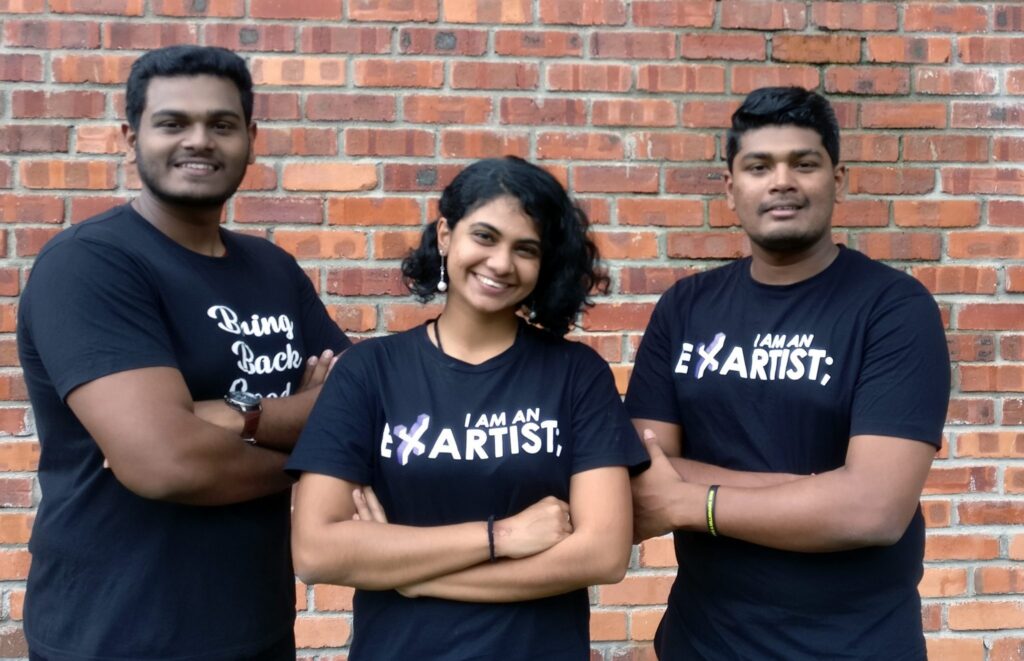
Eswaran Mohan co-founded Exar Technologies with Renuga Nair during their final year at university. UTM and other reporting said the company later made the Forbes 30 Under 30 Asia 2025 list and had grown into an immersive technology business serving more than 50 multinational clients.
That sequence makes the story especially relevant to younger aspiring entrepreneurs. Exar did not stay as a student project. It became a commercial business in a technical and creative field that still requires the market to understand why the product or service matters. That takes more than energy. It takes persistence, credibility, and the ability to keep delivering while the business is still earning its position.
What the company is doing now also matters. Immersive tech sits in a category that can attract attention quickly, but keeping it commercially relevant is harder. The business has continued to grow because it moved from novelty into trusted delivery for real brands.
Lessons from Eswaran Mohan
- You do not always need to wait to feel fully established before building.
- Technical skill only becomes a business when it meets commercial demand.
- Student founders can build serious companies if they stay committed after the first stage.
- Innovation needs market relevance, not just excitement.
- Young founders should think beyond the identity of being young.
- Credibility is built through delivery, not only recognition.
9. Fong Swee Kiang of SkyeChip

Dato’ Fong Swee Kiang is the founder and chief executive officer of SkyeChip, a Penang-based semiconductor design company. UTM’s 2026 profile describes him as a veteran with more than 30 years of experience, including leadership roles at Intel, Broadcom and Altera, and notes that SkyeChip launched MARS1000 in 2025 as Malaysia’s first domestically developed edge AI processor. The same report said the company’s revenue rose from RM57.2 million in FY2023 to RM119.5 million in FY2025, with an IPO expected in 2026.
Fong did not start by moving fast with little experience. He spent years developing technical depth, then built a company from that strength. In deep-tech industries, that can be a major advantage. The founder is not beginning with guesswork. The founder is beginning with a much clearer sense of the product, the market, and the standards the industry will expect.
The current position of SkyeChip also changes the significance of the journey. This is no longer only a specialist design services story. It is becoming part of Malaysia’s broader push into advanced semiconductor capability and AI hardware. For aspiring founders in technical sectors, that is a strong reminder that entrepreneurship can begin with depth, not just speed.
Lessons from Fong Swee Kiang
- In some industries, depth beats speed.
- Entrepreneurship does not have to begin early to become significant.
- Technical credibility can be the strongest market advantage.
- Years spent learning a sector are not wasted time.
- Specialist industries reward clarity and precision.
- A founder can build commercial value from deep domain knowledge.
10. Claire Tan of Grumpy Bagels

Claire Tan is the founder of Grumpy Bagels, a KL café business that grew from a home-baking journey into one of the city’s more visible food brands. Vulcan Post and WeirdKaya both reported that Claire previously worked as a flight attendant with Emirates, returned to Malaysia during the pandemic, began experimenting with bagels, and eventually opened the first Grumpy Bagels outlet. By early 2026, FirstClasse and The Star were writing about the second outlet in Sentul Depot and how the business was moving from first-outlet excitement into more structured growth.
What she chose to build is instructive because it was very clear. It was not a vague café concept trying to do too many things at once. The product, the look, and the customer experience worked together. That kind of clarity matters in consumer businesses. People respond faster when they know exactly what the place is, why it feels different, and why they should come back.
Going viral is one thing. Opening another outlet and building a team around better systems is another. The Star’s reporting on the second outlet highlighted that Claire herself described being much better prepared with SOPs and a management team this time around. That is the real founder transition. The business moves from being exciting to being repeatable.
Lessons from Claire Tan
- A simple concept can travel far if it is executed well.
- Customers remember clarity more than complexity.
- Virality is not the business, it is the pressure test after the launch.
- A second outlet often reveals whether the model is truly repeatable.
- Founders should treat operations as seriously as aesthetics.
- Brand warmth and business discipline can exist together.
Why These Founders Matter to Entrepreneur Malaysia Today
These ten names matter not only because they are successful, but because they reflect the current direction of entrepreneur malaysia more clearly than many older founder lists. They are building in beauty, retail, F&B, networking, mobility, sustainability, immersive tech, semiconductors, and consumer brands. That range matters because it shows that today’s opportunities are not limited to one category or one type of founder.
They also represent a stronger picture of what top young entrepreneurs malaysia look like today. Some started with very little capital. Some came from professional or corporate backgrounds. Some built from personal frustrations, and others stepped into industries most people would have ignored. That diversity of paths is part of what makes the article valuable. It tells aspiring founders that there is no single route into entrepreneurship, but there are clear patterns behind real business growth.
What Aspiring Entrepreneurs in Malaysia Can Really Take From These Stories
These ten founders do not all prove the same kind of success story. That is exactly why they are worth studying. One started with a small side hustle. Another grew through retail expansion. Another turned a product engine into a regional brand-builder. Another rebuilt after losses. Another used technical depth to build long-term credibility. Together, they show that entrepreneurship is not a single formula. It is a sequence of decisions made well over time.
The strongest lesson is that success usually begins with something real. These entrepreneurs stayed close to an actual problem, kept adjusting the business when the model needed it, and built substance before chasing image. They also show that business growth is not only about revenue or publicity. It comes from better systems, sharper market fit, stronger execution, and the willingness to stay with the business long enough for it to mature.
That is why this list matters beyond inspiration. It reflects a newer generation of top young entrepreneurs malaysia whose journeys are still unfolding. Many of them could one day stand alongside the most influential young entrepreneurs malaysia, not simply because they have gained attention, but because they are building businesses with stronger direction and more staying power.
Frequently Asked Questions
1. What can aspiring entrepreneurs learn from successful Malaysian entrepreneurs?
Aspiring founders can learn that success usually starts with solving a real problem, staying close to the market, and building with consistency over time. The entrepreneurs in this article show that strong execution, resilience, and clear decision-making matter just as much as the original idea.
2. Do successful Malaysian entrepreneurs all follow the same path?
No. One of the clearest takeaways from this article is that there is no single route into entrepreneurship. Some founders started with side hustles, some came from corporate or professional backgrounds, and others built in industries that most people would have overlooked.
3. Why is resilience important for entrepreneurs in Malaysia?
Resilience matters because many businesses take time to stabilise, and not every founder starts under ideal conditions. Several entrepreneurs in this article faced losses, difficult industries, or tough market timing, but kept refining the business until it became stronger.
4. Are younger entrepreneurs making a bigger impact in Malaysia today?
Yes. Many younger founders are building serious businesses in sectors such as retail, e-commerce, F&B, technology, personal care, and sustainability. This article highlights how newer Malaysian entrepreneurs are creating meaningful business growth while still actively shaping their companies.
5. What is the biggest lesson behind these Malaysian entrepreneur success stories?
The biggest lesson is that entrepreneurship is rarely about one big moment. It is usually built through sharper decisions, better discipline, clearer market understanding, and the ability to keep going until the business becomes more than just an idea.