The message usually shows up dressed to impress, a WhatsApp text or an email announcing that your company has been “specially chosen by our experienced judging panel” for a leadership honour you never applied for. The flattery lasts about ten seconds, right up until you hit the fine print: a mandatory RM8,000 to RM30,000 package that buys you a gala table, a trophy, and a half-page write-up in a publication nobody reads outside the ballroom.
That’s the reality of the business award landscape today, part genuine industry benchmark, part commercial machine built to monetise founder pride. Win the right recognition and you can unlock real value: sharper media coverage, stronger investor confidence, tender eligibility, and easier conversations when hiring senior talent. Chase the wrong one, and you’ve simply burned budget while quietly signalling to the banks, procurement officers, and investors who’ve seen this game before that you’re the type of company that pays for praise.
This guide is here to help you tell the two apart before you commit a single ringgit or a single working hour in 2026.
Why Business Owners Still Chase Recognition
Before picking apart the red flags, it’s worth acknowledging that the appeal isn’t purely ego. A credible entrepreneur award malaysia in Malaysia can deliver measurable commercial upside:
- Credibility with financiers and investors, where third-party validation carries genuine weight during loan applications, grant reviews, or funding pitches.
- Stronger talent pipelines, since award-recognised companies read as more stable and appealing to job seekers scanning your careers page.
- Real media exposure, particularly when the win is accompanied by editorial coverage rather than a paid advertorial dressed up as a news feature.
- An edge in tenders and procurement, especially with multinational clients or government-linked panels that give weight to verified accolades.
- A morale lift for your team, giving employees something concrete to point to after a hard year of building the business.
The complication is that the awards industry here has scaled fast enough that legitimate and predatory organisers now sound almost identical, the same congratulatory tone, the same polished PDF, the same confident claim of “national recognition.” That resemblance is exactly why due diligence matters more heading into 2026 than it ever has.
The Pay-to-Play Problem: How to Spot It
Let’s be direct about this. A sizeable portion of the business award Malaysia ecosystem runs on a simple formula: sell the recognition, skip the real evaluation. These organisers profit from application charges, mandatory gala seating, sponsorship bundles, and “media feature” add-ons, not from any genuine scrutiny of your business.
A reasonable administrative fee to cover judging and event logistics isn’t inherently a problem. The issue starts the moment payment determines whether you “win,” how prominently your win is featured, or which category you land in. If the trophy only shows up after you agree to a RM15,000 table purchase, you haven’t earned an award or you’ve bought one.
Red Flags to Check Before You Respond
Run every award invitation through this list before your team spends another hour on a submission.
- A “you’ve been shortlisted” message before you’ve applied for anything. This is the clearest tell of all. Genuine award bodies don’t pre-select winners from a purchased contact list.
- Compulsory high-cost table purchases. If your “winner” status is contingent on buying a gala table or sponsorship tier, judging and payment have effectively merged into one transaction.
- No named, independent judging panel. Trustworthy programmes disclose who evaluates entries and their credentials. A vague reference to a “proprietary evaluation methodology” should raise your guard.
- Fuzzy, unmeasurable criteria. Phrases like “business excellence” or “visionary leadership” with no scoring rubric behind them tell you nothing about how a winner is actually chosen.
- Zero independent verification. Financial figures, growth claims, or impact statements are accepted without any supporting documentation or cross-checking.
- An excessive number of micro-categories. Awards with dozens of hyper-specific titles are often structured so nearly everyone who applies walks away with something to justify the fee.
- No traceable past winners. If previous recipients can’t be found on LinkedIn or in credible, non-sponsored press, treat the programme as unproven.
- Aggressive upselling with manufactured urgency. Repeated calls pressuring you to “confirm your slot before it’s gone,” bundled with logo packages unrelated to actual judging, is a sales funnel wearing an accolade’s costume.
- Ambiguous usage rights. You should know precisely what you’re allowed to call yourself afterward “winner,” “finalist,” and “recipient” are not interchangeable, and some organisers even charge extra to license their logo.
Credible Recognition Platforms Worth Considering in 2026
No single business award Malaysia programme fits every company, eligibility, judging methodology, and commercial relevance vary considerably. Always confirm current-year rules, fees, and criteria directly with each organiser, since details shift annually.
SOBA
Star Outstanding Business Award. Run by Star Media Group (The Star), SOBA is among the most established SME recognition platforms in the country, typically segmenting applicants by turnover tier so smaller companies aren’t judged against far larger ones. Its judging draws on industry and trade association involvement, and a strong showing here translates into mainstream domestic media visibility and credibility with local suppliers, distributors, and retail partners. It suits Malaysian SMEs with a clear, numbers-backed growth story.
Golden Bull Award
One of the longer-standing SME recognition programmes locally, organised through Nanyang Siang Pau in collaboration with SME and enterprise development bodies. Its methodology leans heavily on financial performance, year-on-year growth, and governance structure — which immediately separates it from vanity mills relying on self-declared claims. Its presence across several Southeast Asian markets gives it useful cross-border weight if regional expansion is part of your plan.
EY Entrepreneur Of The Year (EOY) Malaysia
This sits in a different category altogether, it evaluates the entrepreneur’s journey and leadership rather than the company as a standalone product. Judging is conducted by an independent panel of senior business leaders and past winners, not EY staff, which removes an obvious conflict of interest. Winners may go on to represent Malaysia at the global EY World Entrepreneur Of The Year event. It’s the most selective option here and the least susceptible to pay-to-play dynamics, built for founders who’ve scaled meaningfully, not companies chasing a quick publicity hit.
Enterprise 50 (E50) Award
Backed by SME Corp Malaysia with professional-firm involvement, E50 specifically recognises fast-growing, unlisted Malaysian companies through verified financial submissions. Its government linkage lends institutional weight that purely media-driven awards often lack, making it particularly relevant for companies eyeing government tenders, grants, or a future Bursa Malaysia listing.
AsiaRecord
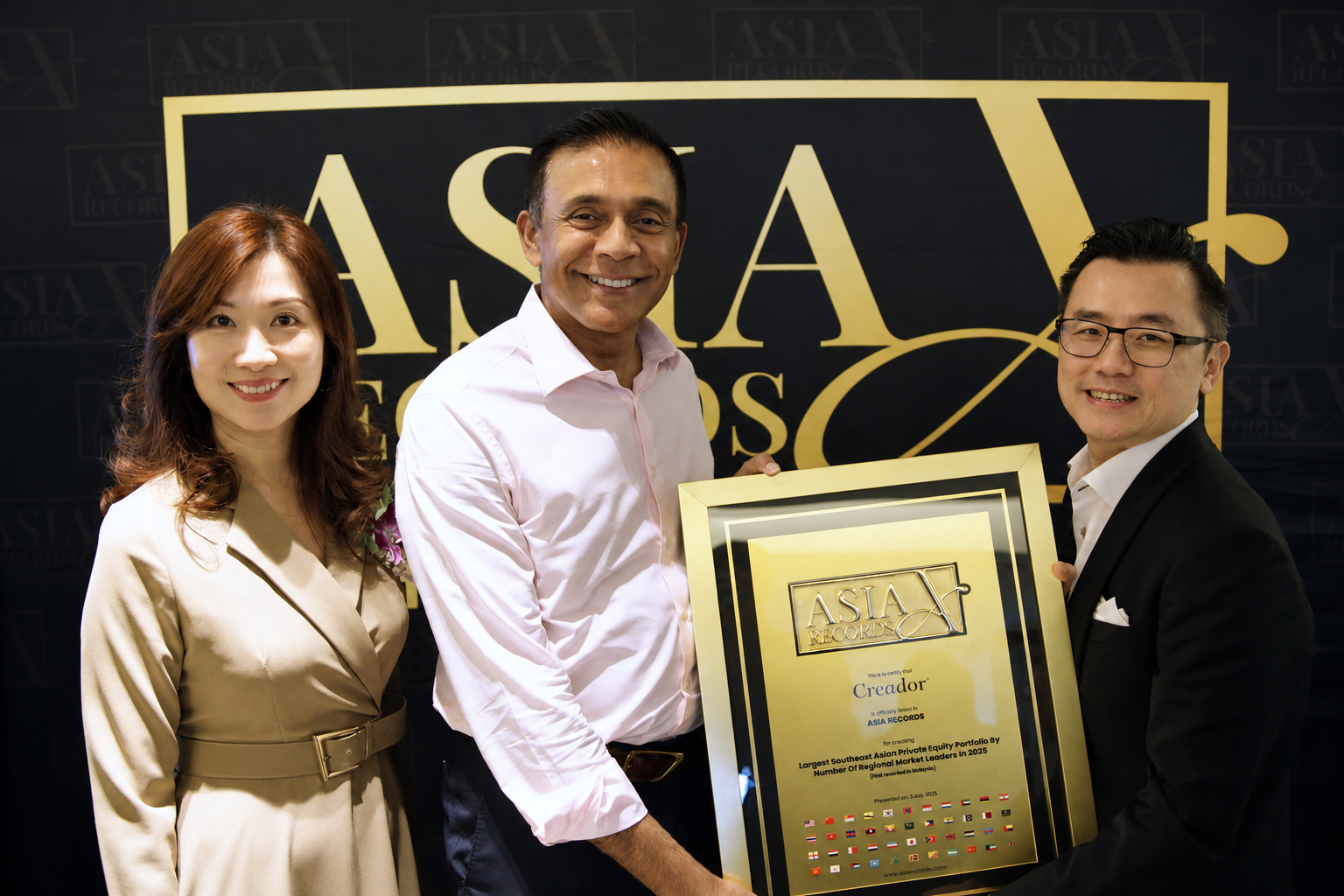
Not every defensible claim a Malaysian business can make comes wrapped in a gala trophy and some of the strongest ones are records, not rankings. AsiaRecord operates as a regional records and milestone verification platform, documenting claims such as being the first, the largest, the fastest, or the most extensive in a defined category, based on submitted evidence rather than a judging panel’s subjective scoring. If your business genuinely holds a measurable, checkable milestone, the widest outlet network in a specific segment, or the first company to launch a particular service locally, getting that claim verified through a platform like AsiaRecord gives you a citable, third-party-backed statement for PR and marketing, instead of an unverifiable superlative you simply wrote yourself. It’s not a substitute for a competitive business award, but it’s a legitimate complement when your differentiator is a hard fact rather than a subjective category.
Sector-specific and chamber-backed awards. Recognitions organised by established chambers such as ACCCIM, MICCI, or FMM, or by industry associations in sectors like manufacturing, technology, or sustainability, can carry genuine weight within their vertical even without wide public visibility. If your buyers are industry insiders rather than the general public, a narrower, credibly-judged sector award can outperform a bigger, generic gala.
Comparison Summary: Matching the Platform to Your Business
| Platform | Best Suited For | Judging Rigor | Cost Structure | Main Commercial Value |
| SOBA | Malaysian SMEs with a strong growth/resilience story | Established, structured, tiered by turnover | Reasonable entry fee; no mandatory “buy-to-win” package | Mainstream media visibility, local trust |
| Golden Bull Award | Growth-stage SMEs with solid financial performance | High; strong emphasis on financials and governance | Entry/participation fee and verify current gala costs | Regional (ASEAN) credibility, financier trust |
| EY Entrepreneur Of The Year | Established founders, high-growth and scale-up leaders | Extremely high; independent panel of past winners/business leaders | Selective, nomination-based; minimal pay-to-play risk | Global EY network, investor and PE credibility |
| Enterprise 50 (E50) | Fast-growing unlisted companies | Government-linked; requires verified financials | No mandatory purchase; SME Corp backed | Tender edge, institutional credibility |
| AsiaRecord | Businesses with a genuine, provable “first/largest/fastest” milestone | Evidence-based verification, not subjective panel judging | Documentation/verification fee; no mandatory gala package | Independently-backed claim for PR and marketing use |
| Sector/Chamber Awards | Companies with measurable niche expertise | Depends on the sponsoring body’s authority | Usually modest | Buyer trust within a specific industry |
| Generic “Gala” Pay-to-Play Awards | Unvetted SMEs chasing quick prestige | Little to none; judges rarely disclosed | Mandatory table/sponsorship purchase to the win | Minimal; risks skepticism from sophisticated partners |
The Due-Diligence Checklist Before You Apply or Pay
Even the credible names above deserve annual scrutiny, since organisers, fee structures, and judging panels can shift year to year. Work through this checklist before your team prepares any submission.
- Check company registration. Search SSM (Companies Commission of Malaysia) records to confirm the organising entity is a legitimately registered company with a genuine operating history, not a shell formed a few months prior.
- Ask who’s judging. A legitimate organiser readily shares judge names and credentials. Hesitation or a non-answer is your cue to walk away.
- Verify past winners independently. Search LinkedIn and Google News for previous recipients and confirm coverage exists outside the organiser’s own marketing channels.
- Request a full cost breakdown upfront. Ask directly whether winning is contingent on any purchase, gala tickets, sponsorship packages, certification, or logo licensing fees.
- Confirm usage rights in writing. Know exactly what you can call yourself, on which materials, and for how long.
- Consult your industry peers or chamber of commerce. Established business owners in your sector usually know within seconds whether a given award carries real weight.
- Check the audience, not just the guest list. A packed ballroom isn’t automatically valuable, ask whether actual customers, procurement decision-makers, investors, or media will be present.
- For milestone or “first/largest/fastest” claims, insist on documented verification. Rather than printing a self-declared record on your own marketing collateral, a platform such as AsiaRecord that requires supporting evidence before certifying a claim carries far more credibility with customers and journalists alike.
Calculating the Real ROI
Don’t judge an award by how impressive the trophy looks in reception. Judge it by what genuinely changed in your business afterward. The full cost of participation is almost always larger than the headline entry fee:
Total Award Investment=Entry Fee+Preparation Time Cost+Gala/Event Cost+PR and Activation Cost
Avoid crediting every new enquiry to the award. Use more reasonable attribution methods instead:
- Track a dedicated “award campaign” landing page or unique enquiry code.
- Ask new customers directly how they discovered you.
- Monitor proposal win rates and branded search volume before and after the announcement.
- Record qualified recruitment applications and media mentions linked to the recognition.
If a RM20,000 investment in entry, table, and promotion produces no verifiable leads, no media coverage, and no measurable brand lift beyond a company Instagram post, the ROI is effectively negative, no matter how good the trophy looks on the shelf.
Activating the Win (The Trophy Is Only Raw Material)
Winning is only half the equation. The real value comes from how you distribute it:
- Publish a factual, specific announcement: like category, organiser, year… rather than an inflated claim.
- Add the recognition to proposals, tender documents, and company profiles.
- Brief your sales team with approved wording for client conversations.
- Use the achievement in recruitment advertising and on careers pages.
- Pitch a genuine business story, not just a trophy photo, to relevant media outlets.
When You Should Not Enter
Sometimes the most commercially sound decision is to walk away. Skip an award when it’s unrelated to your target market, the cost is disproportionate to any realistic return, the criteria are vague, or you can’t produce solid evidence to support your submission. Don’t enter simply because a competitor did. And never let a trophy substitute for a weak business foundation, recognition can’t fix poor cash flow or unreliable delivery, and public exposure may simply draw more attention to those gaps.
Our Conclusion
Heading into 2026, treat every business award Malaysia invitation with the same discipline you’d apply to any other line item in your marketing or business development budget. SOBA, the Golden Bull Award, EY Entrepreneur Of The Year Malaysia, the Enterprise 50 Award, and evidence-based verification platforms like AsiaRecord remain credible starting points precisely because they publish standards, involve independent verification, and have track records you can check outside their own marketing materials but each serves a different objective, so match the platform to your actual stakeholders rather than chasing prestige for its own sake.
The practical rule is simple: enter an award only when the credibility of the platform outweighs the cost of participating and when you already know exactly how the win will support revenue, talent, or strategic relationships. If you can’t answer that before you submit, save the budget and let the vanity award mills chase someone else’s inbox.
Read more about 100MIYE by Entrepreneur Insight to see how this platform highlights top young business leaders and personal brand excellence in Malaysia.