PETALING JAYA – Nine young Malaysians were named on Forbes’ 30 Under 30 Asia list for 2018, a regional roll call that puts fresh founders, creators, and operators on the radar across Asia, and it is exactly the kind of entrepreneur malaysia news that gets shared fast because it signals who is building real momentum early.
Who are the 9 Malaysians on Forbes 30 Under 30 Asia 2018?
- Amira Geneid, Zahara
- Raeesa Sya, Orkid Cosmetics
- Jonathan Weins, dahmakan
- Shila Amzah, singer
- Jason Lee, NEM.io Foundation
- Lim Yuet Kim, The Picha Project
- Lee Swee Lin, The Picha Project
- Suzanne Ling, The Picha Project
- Vinesh Sinha, FatHopes Energy
1. Amira Geneid | Zahara

Amira Geneid
Source: https://www.tatlerasia.com/the-scene/people-parties/amira-geneid-beauty-and-her-faith
Amira Geneid made the Forbes 30 Under 30 Asia 2018 list through Zahara, a halal-compliant cosmetics brand built for Muslim consumers who wanted beauty products that still fit daily religious practice. Her breakout product was Zahara’s oxygen and water-permeable nail polish, created so users can perform wudhu without removing it. In the beauty space, that single product detail became a strong reason people remembered the brand, because it solved a real, everyday friction point with a clear technical solution.
Why she stood out
- Solved a specific Muslim consumer need with a product-led innovation
- Turned functionality into a clear brand identity, not just marketing
2. Raeesa Sya | Orkid Cosmetics

Raeesa Sya
Source: https://www.nst.com.my/lifestyle/bots/2017/04/231355/millennial-lady
Raeesa Sya was recognised for building Orkid Cosmetics to fill a gap in the Muslim beauty market with an e-commerce-first approach aimed at millennial customers. Forbes described Orkid as a line created around accessible, trend-led products for a fast-moving consumer audience. Her story sits at the intersection of beauty and digital execution, where growth is driven by clear positioning, community trust, and the ability to move products at scale online.
Why she stood out
- Built a halal beauty brand with a clear audience and online-first distribution
- Positioned products for a younger market that buys through digital channels
3. Jonathan Weins | dahmakan

Jonathan Weins
Source: https://www.food-service.de/weltweit/news/kuala-lumpur-digitale-kantine-mittagessen-fuer-zig-tausende-41139
Jonathan Weins earned his spot through dahmakan, a Malaysia-based foodtech startup founded after his time in finance. Forbes highlights dahmakan as a delivery model shaped by technology and operations, including proprietary routing and a focus on consistency. In Malaysia’s crowded food delivery space, the story is not just about delivering meals, but about building a system that can handle daily volume, predictable quality, and repeat customers.
Why he stood out
- Built a delivery business that leans heavily on operations and tech execution
- Created a repeat-demand model in a category where many struggle to stay consistent
4. Shila Amzah | Music and entertainment

Shila Amzah
Source: https://www.nst.com.my/lifestyle/groove/2026/01/1368454/showbiz-shila-amzah-stands-tall-stage-and-home
Shila Amzah was listed under Entertainment and Sports, and her inclusion reflects a different kind of build: turning talent into a regional career. Malaysian coverage of her Forbes recognition highlights her breakthrough in the Chinese music market, a space known to be highly competitive. For a young artist, the business layer matters, audience growth across borders, market fit, and staying relevant through steady releases and live presence.
Why she stood out
- Built cross-border traction in the Chinese music market, not only local visibility
- Proved long-term consistency in output and audience building
5. Jason Lee | NEM.io Foundation
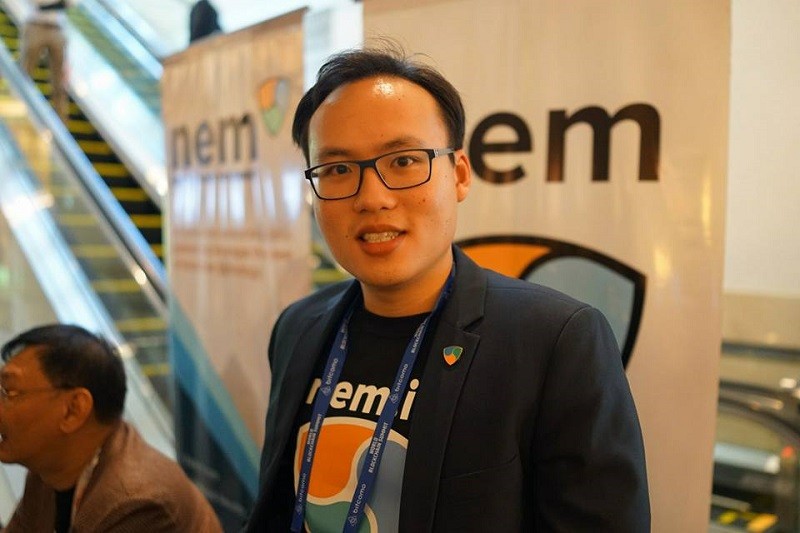
Jason Lee
Source: https://www.optionstheedge.com/topic/people/13-entrepreneurs-malaysia-forbes-2018-%E2%80%9830-under-30-asia%E2%80%99-list
Jason Lee was recognised under Enterprise Technology, linked to NEM.io Foundation where his work centred on partnerships and enterprise adoption. Forbes lists him in connection with the foundation’s regional expansion role, and other coverage frames his work around helping organisations understand how blockchain can be applied in real business settings. This is an execution-heavy space, where credibility comes from whether enterprises actually adopt the technology, not whether the idea sounds futuristic.
Why he stood out
- Enterprise-focused role driving partnerships and adoption, not just product talk
- Positioned blockchain around practical use cases across industries
6. Lim Yuet Kim | The Picha Project

Lee Swee Lin, Kim Lim, Suzanne Ling
Source: https://www.tatlerasia.com/the-scene/people-parties/my-pichaeats-lee-swee-lin-kim-lim-suzanne-ling
Lim Yuet Kim co-founded The Picha Project, a Malaysia-based social enterprise that empowers refugees through food preparation, catering, and delivery. Forbes profiles the project as a model designed to support refugee families through paid orders, turning skills into consistent income opportunities. The story resonates locally because it requires both empathy and hard operations, sourcing, scheduling, quality control, and corporate client reliability.
Why she stood out
- Built a mission-led business with a real operating model and customer demand
- Created a sustainable income structure for refugee families through food
7. Lee Swee Lin | The Picha Project
Lee Swee Lin is part of the same founding team behind The Picha Project, recognised for turning a social idea into an actual business system. UCSI’s feature on the founders frames their work as social entrepreneurship with measurable outcomes through their food operations. For many Malaysians, this is what separates a meaningful initiative from a short-term campaign, the ability to deliver repeatedly, not occasionally.
Why she stood out
- Helped scale a social enterprise through consistent delivery and structured operations
- Built trust with customers by making the model repeatable and reliable
8. Suzanne Ling | The Picha Project
Suzanne Ling completes the trio of co-founders behind The Picha Project, recognised by Forbes for social entrepreneurship through a refugee-empowerment model built around food. The work is operationally demanding because it must protect quality for customers while also supporting the cooks and families behind every order. In that sense, this is a story about building systems that can scale, while keeping the mission intact, which is often the hardest part.
Why she stood out
- Turned a mission into a structured business that could scale without losing purpose
- Showed that social enterprise can be commercially viable when execution is strong
9. Vinesh Sinha | FatHopes Energy

Vinesh Sinha
Source: https://vulcanpost.com/638116/fathopes-energy-vinesh-biofuel/
Vinesh Sinha was recognised for FatHopes Energy, a company built around collecting waste oils from the food industry and converting them into biofuels. Forbes describes him as founding FatHopes in 2010, and Malaysian coverage ties his work to turning an environmental problem into an industrial supply chain and a commercial product. It is a less glamorous sector, but it is high-impact when the logistics, compliance, and buyer demand are handled properly.
Why he stood out
- Converted waste cooking oil into a scalable biofuel business model
- Built an industrial operation in a compliance-heavy, high-demand space
Conclusion
Lists like Forbes 30 Under 30 Asia travel fast for a reason. They spotlight patterns that Malaysia keeps seeing again and again: founders who solve a clear problem, operators who build repeatable systems, and creators who turn consistency into real reach. Across beauty, foodtech, entertainment, enterprise technology, social enterprise, and clean energy, these nine names show how different the routes can be, but how similar the fundamentals are.